
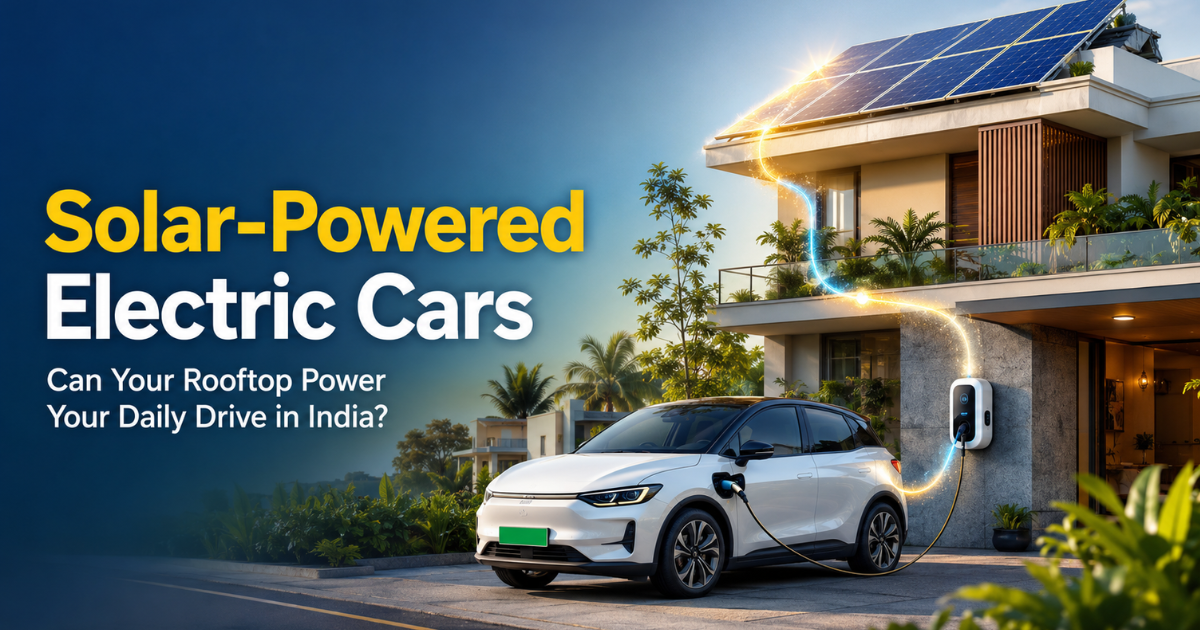
Rooftop solar and Electric Vehicles (EVs) were two separate approaches to sustainable living, discussed for years. One reduced electricity bills for the household, and the other reduced the dependence on petrol and diesel.
These technologies are now starting to converge in 2026.
With EVs becoming more common on Indian roads, a new question being posed to homeowners is whether they can also power the EV parked in their garages with the solar panels on their roofs?
The answer is yes. The rooftop solar power system, if designed properly, can produce enough electricity for household use and charge a considerable amount of an EV. Homeowners can generate some of the energy required to power their cars at home, rather than at a gas station.
The actual reason for the synergy between solar and EVs:
Cleaner at point of use but still requires electricity for an electric vehicle. If the power is produced exclusively from the grid, the owner is still subject to a power tariff and conventional energy resources.
Rooftop solar is the gamechanger.
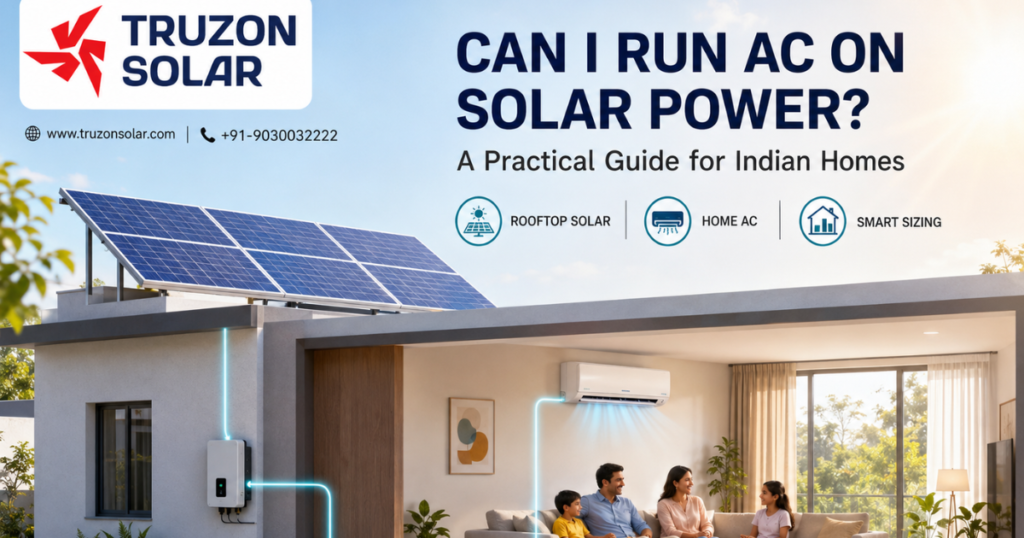
The solar panels generate electricity in the day, which is then used in the house. If the EV is plugged in during the solar generation time, then some of the electric power produced by the solar system can be used to charge the EV. A solar power system connected to the grid may be able to offset some or all of the electricity supplied to the system during the day if the vehicle is normally charged during the overnight period and can contribute to reducing the total electricity bill.
How Much Solar Power Does an EV require?
The necessity will depend on the car, battery capacity, driving distance, and driving conditions.
Let’s imagine a family in an urban environment who drives about 30 to 40 kilometres a day. This may require about 6-8 units of electricity, depending on the vehicle’s efficiency. A suitable rooftop solar system can be used to meet this requirement partially and also for regular domestic consumption.
But if a standard residential system is installed and an EV added later, without considering the required system capacity, the savings may not be realised.
It is important to note that if a household plans to purchase an EV, they must inform their solar supplier during the design process. The provider could inspect electricity consumption, driving practices, roof area and sun exposure to determine the appropriate size system.
This is where bespoke planning can be more beneficial than choosing one of the popular sizes.
| Factor | Validated Fact | What It Means for the Homeowner |
| Solar availability | Most parts of India receive approximately 4-7 kWh of solar energy per square metre per day. | India has favourable conditions for generating rooftop solar power, although actual output varies by location and season. |
| EV energy requirement | A typical electric car may consume approximately 6-8 units of electricity to travel 30-40 km, depending on its efficiency. | A suitably sized rooftop system can meet a meaningful portion of daily EV charging needs. |
| Best charging period | Solar generation is highest during daylight hours, particularly around midday. | Charging the vehicle during the day allows more solar electricity to be used directly. |
| Night-time charging | Solar panels do not generate electricity at night. | Night charging requires grid electricity, stored battery power or adjustment through net metering, where available. |
| Grid power cuts | A standard on-grid solar system automatically shuts down during an outage for safety. | Continued EV charging during a power cut requires a suitably designed hybrid system and battery storage. |
| Home charging | Private EV chargers commonly use the property’s existing AC electricity connection. | The wiring, sanctioned load, earthing and charger compatibility should be assessed before installation. |
| System capacity | Household appliances and an EV draw power from the same electrical system. | Existing consumption and expected vehicle use should both be considered when deciding solar capacity. |
Can I charge the car directly during the day?
Yes, particularly if the car stays at home during the daytime.
It’s ideal for those who work from home, a family with many cars, or a retired resident/business owner who has a flexible work schedule. Charging at times when the sun produces more energy can enable more direct use of the electricity generated.
It may not be practical for some people who drive to work in the morning to charge their cars at home during the day. Even if state regulations prohibit rooftop solar, they may still benefit from it as long as they are connected to the net metering program.
Also, providing solar charging at work is emerging as an option. Solar-powered charging stations can be set up in offices, factories, schools and commercial campuses in their parking areas so they can charge their cars during the day.
What if the Power is out?
Typical on-grid systems are generally switched off during a power outage, for safety reasons. Hence, it may not keep charging an EV in the event of a power failure. For homeowners who need a backup charging option, a hybrid solar system (HSS) can be a good alternative if the load management is appropriate and sufficient battery storage is available. But for an electric car to be charged, it requires a lot of energy; thus, the battery and inverter should be properly sized.
Saving more than the price of petrol:
While charging with electricity is already cheaper for an EV buyer than petrol, it can save even more with solar charging.
With the installation of a rooftop solar system, there is no impact on energy production when petrol and diesel prices increase. It also offers benefits beyond the car, such as lighting, appliances, cooling systems and more, for home needs.
Installing the home solar system in an “EV-ready” configuration today is a wise choice for families that intend to buy an EV in the next few years, as it will avoid the cost of retrofitting the system if they do so. Upgrades might be easier if you have sufficient inverter capacity, electrical provisions, and space for expansion.
Rooftop solar is not just a solution to lower the current electricity bill. It is incorporated into the family’s overall energy and transportation strategy.
Conclusion
It’s not science fiction to think of a car that is partially solar powered, but it is possible.
When planned together, rooftop solar and EVs can be a more attractive way to save money, lower energy consumption from traditional fuels and gain long term cost control.
The next generation of homes will not only use electricity, but they will produce electricity. The generation of electricity will not just be done by electricity, but by electricity as well. They will be their own generation, their own management and their own consumption, so the trips begin at their own doors.
Frequently Asked Questions
1. Can rooftop solar fully charge an electric car?
Yes, a correctly sized Rooftop Solar System can fulfill most or perhaps all the daily charging requirements, based upon driving distance and home consumption.
2. Can I charge my EV with solar power at night?
Solar panels won’t create energy during the nighttime, so you’ll require a hybrid system to store energy for evening use, or grid electric power.
3. How many solar panels are needed for an EV?
The number depends on the EV’s energy consumption, daily kilometres driven, household load, roof space and local sunlight conditions.
About the Author