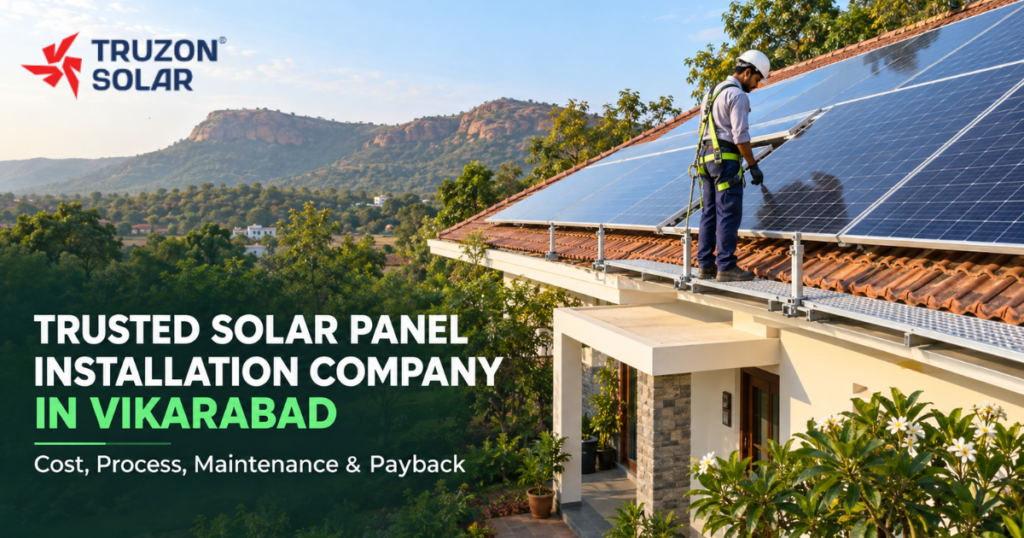

India is blessed with vast solar energy potential; about 5,000 trillion kWh per year of energy is incident over India’s land area with most parts receiving 4-7 kWh per sqm per day. There has been a growing use of this source of energy in the past few years, despite the growing cost of PV cells. But at the same time, the cost of non-renewable energy sources has grown at the same pace, which makes the scale shift in favour of solar energy, as the payback and ROI period is short i.e. 4-5 years.
Let’s look into how solar panels for homes can be beneficial and what are the pros and cons of installations.
How do solar panels work?
Solar panels contain photovoltaic cells that are made out of silicon and grouped into larger modules. When the sunlight interacts with these cells it causes movement in electrons and electricity flows. Whereas other components of solar panels aid in harnessing and controlling this electricity.
Solar panels for a home have numerous benefits and can give you energy independence with a fast ROI of just about 4-5 years.
7 Benefits of installing solar panels for home
1. Cost savings with low-risk investment
Solar panels for home can aid in cost savings for your electricity needs. Be it heavy-duty AC or be it cloudy weather solar energy will back up your energy requirements. These solar systems provide far better flexibility than traditional utilities and also give you the freedom to buy electricity at reduced rates from a third-party system. Also, solar systems with batteries store the excess electricity and enable you to utilise the same when the broader grid goes down saving you from extra unnecessary costs. The expected lifespan of solar panels is typically 25+ years and the payback period is around 4-5 years.
Following are the factors that determine the savings and turnaround time of investment:
- – Electricity consumption
- – Solar energy system size
- – Whether you own or lease your system
- – Hours of daily sunlight
- – Size and angle of roof
- – Local electricity rates
2. Increased home value
With solar panels meeting your home needs, it also has a distinctive advantage of increasing your property value. Many buyers view it as an added advantage and are willing to invest more in a property that has solar panels installed for home energy needs. This appreciates the property value over time giving you returns on both property and investment on the solar panels.
3. Environment-friendly and long-term sustainability
Solar energy reduces the dependence on renewable sources and gives you the privilege to support environmental initiatives right from the comfort of your home. Millions of people in Indian communities have profited from solar energy-based decentralised and distributed applications that provide environmentally friendly lighting, cooking, and other energy needs. For every kWh of solar energy produced, greenhouse gas emissions such as CO2 and other harmful pollutants including sulfur oxides, nitrogen oxides, and particulate matter will be significantly reduced.
4. Energy independence
Solar energy makes you truly energy-independent and reduces your dependency on traditional energy sources. Also, traditional utilities consume large quantities of water as compared to solar power which has the minimum requirements. Apart from this, commitment to solar power also exhibits the dedication to reducing the carbon footprint that comes from excessive exploitation of non-renewable energy sources.
5. Adaptable to all climates
Installation of solar panels for homes is not dependent on the climate conditions, as the panels are super adaptable to all climatic conditions. Even places with low solar resources can experience cost savings. All that is needed is sunshine to function and store the energy.
6. Get tax benefits and rebates
The government of India has launched PM Surya Ghar: Muft Bijli Yojana, under that scheme, households will be provided with a subsidy to install solar panels on their roofs. In addition to government subsidies for solar panels, these programs significantly reduce the costs associated with installing a solar system. India’s transition to sustainable energy is aided by solar subsidies, which allow homeowners to produce electricity using renewable resources and lower their electricity costs.
7. Earn extra income by selling surplus electricity
Once your energy needs are met, you can sell the surplus electricity and earn extra income from your home. During sunny days, excess energy from solar panels can be stored in batteries or fed back into the grid, giving you a chance to earn compensation from utility companies.By pairing solar panels with energy storage systems, homeowners can store surplus energy for use at night or on cloudy days. In off-grid areas, solar panels provide a cost-effective power solution while generating potential savings from selling unused energy back to the grid.
Go Solar with Truzon Solar- India’s Fastest Growing Solar Company
Solar energy also contributes to a greener and more sustainable future thus improving the brand reputation. Truzon Solar is one of the prominent solar power companies in India. Our experts assess your requirements and provide custom solutions. Accredited by TSREDCO (Government of Telangana) and MNRE (Government of India) as the No.1 Solar Company for Renewable Energy, we are proud of our many awards and prestigious projects with large corporations, government organizations, CSR programs, and industries across the country.
About the Author