
Installing a solar plant involves much more than placing panels on a rooftop. The system must be designed for the property, built with compatible components and installed according to electrical and structural safety requirements. A weakness at any stage can affect generation, equipment life and return on investment.
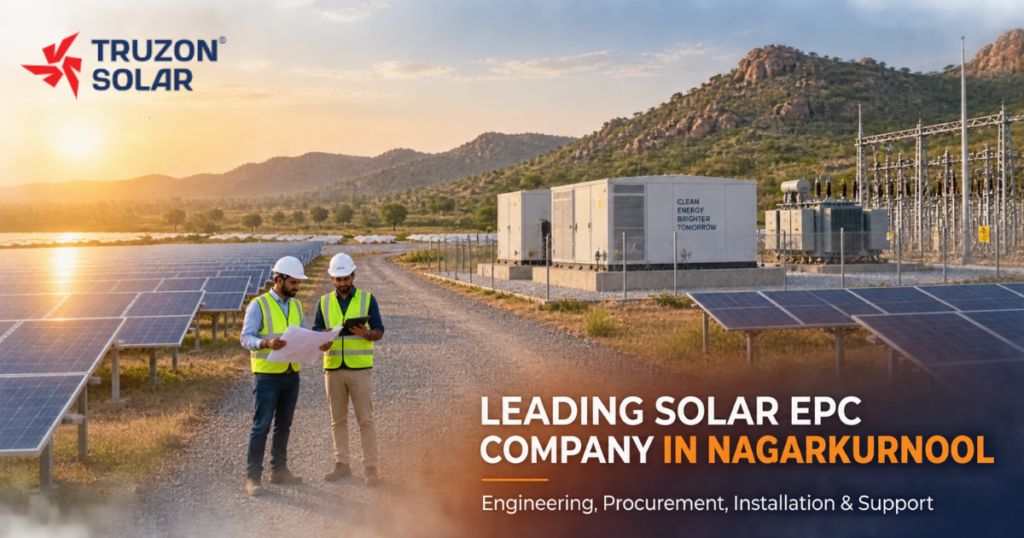
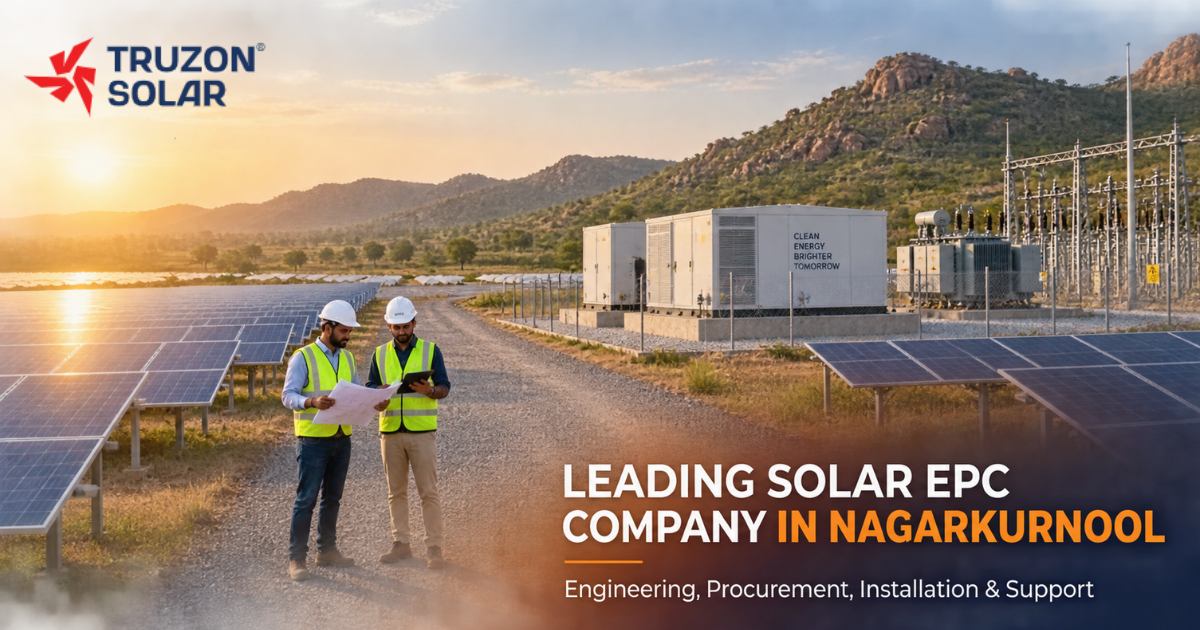
Under this approach, one company takes responsibility for planning, sourcing, installation, testing and commissioning. Customers searching for a leading solar EPC company in Nagarkurnool can work with Truzon Solar for a coordinated solution covering the entire project.
Table of Contents
- What Does Solar EPC Mean?
- Why Solar Is Suitable for Nagarkurnool
- Solar Engineering and System Design
- Procurement of Solar Equipment
- Installation and Commissioning
- Solar System Sizes
- Savings and Return on Investment
- Maintenance and Technical Support
- Why Choose Truzon Solar?
- Frequently Asked Questions
What Does a Leading Solar EPC Company in Nagarkurnool Do?
A solar EPC company manages a project from its initial assessment to final commissioning. The process generally includes:
- Reviewing electricity consumption
- Inspecting the proposed installation site
- Designing the solar system
- Selecting suitable equipment
- Procuring panels, inverters and structures
- Completing installation and electrical work
- Testing and commissioning the plant
- Providing operating and maintenance guidance
By choosing a leading solar EPC company in Nagarkurnool, customers can reduce coordination problems and maintain better control over timelines, equipment compatibility and installation quality.
Why Solar Energy Works Well in Nagarkurnool
Nagarkurnool receives ample sunlight during most months of the year. Homes, shops, schools, hospitals, farms, warehouses and small industrial facilities can use their rooftops or available land to generate electricity.
An on-grid solar system produces power during the day and works alongside the regular electricity supply. The generated electricity is first consumed within the property. Surplus energy may be exported to the grid through net metering, subject to the applicable DISCOM regulations.
Solar is particularly useful for properties with regular daytime consumption. However, system capacity should be based on actual energy use rather than roof size alone. A leading solar EPC company in Nagarkurnool will study electricity bills, sanctioned load, operating hours and available space before recommending a plant.
Engineering by a Leading Solar EPC Company in Nagarkurnool
Engineering is the foundation of a reliable solar project. Before preparing the design, the technical team surveys the property and checks the roof’s dimensions, condition, direction and exposure to sunlight.
Nearby buildings, trees, water tanks and parapet walls can cast shadows on panels. Even partial shading can reduce the output of a solar array, which is why panel placement must be carefully planned.
The engineering stage also covers:
- Selection of the appropriate plant capacity
- Panel layout and orientation
- Inverter sizing
- Mounting structure design
- Cable routing
- Earthing and lightning protection
- Electrical safety provisions
- Expected annual generation
A well-engineered system is designed around the site instead of forcing a standard layout onto every roof. Truzon Solar evaluates these practical conditions while preparing a project proposal.
Procurement by a Leading Solar EPC Company in Nagarkurnool
Procurement is not simply about purchasing solar panels at the lowest possible price. Every component must be technically compatible and suitable for the site.
The main equipment in a solar plant includes modules, an inverter, mounting structures, DC and AC cables, junction boxes, earthing material and protective devices. The quality of smaller components is just as important because loose connections or unsuitable cables can create safety and performance problems.
A leading solar EPC company in Nagarkurnool should clearly mention the proposed equipment specifications and warranties in its quotation. Customers should know what is being installed rather than receiving only a combined project price.
Truzon Solar selects components according to system capacity, site requirements and the type of application. This coordinated approach helps ensure that the panels, inverter and electrical equipment work together properly.
Installation Process Followed by Truzon Solar
Once the design and equipment are finalised, the project moves to the installation stage.
Site Preparation
The installation area is marked, and the roof is checked before material is moved to the site. Any required civil or structural work is identified in advance.
Structure and Panel Installation
The mounting structure is securely fixed while maintaining the required panel angle and spacing. Solar modules are then installed according to the approved layout.
Electrical Work
Technicians install the inverter, DC and AC cables, earthing system and safety devices. Cables are routed carefully to protect them from water, heat and physical damage.
Testing and Commissioning
After installation, the system is tested for connections, voltage, inverter operation and generation. The plant is commissioned only after these checks are completed.
A leading solar EPC company in Nagarkurnool will also explain how customers can monitor daily production and identify an unusual fall in output.
Solar System Sizes for Different Properties
Small homes with limited consumption may consider a 1 kW or 2 kW rooftop system. A medium-sized household may require around 3 kW, while larger homes, offices and clinics may need 5 kW or more.
Commercial and industrial plants require a more detailed assessment. Operating hours, seasonal demand, tariff category and transformer capacity may influence the final design.
As a broad estimate, a 1 kW plant may generate around 110–130 units per month under favourable conditions. Actual generation varies with sunlight, panel direction, temperature, shading and cleanliness.
The leading solar EPC company in Nagarkurnool should recommend a capacity based on recent electricity bills and realistic production estimates, not exaggerated savings claims.
Savings and ROI from Solar EPC Projects
Electricity savings depend on the size of the plant, annual generation, tariff and the percentage of solar power consumed within the property.
For example, a 5 kW plant may generate approximately 6,500–7,500 units in a year under suitable conditions. If the effective electricity rate is ₹7 per unit, its potential annual benefit may be around ₹45,500–₹52,500. These figures are indicative and will vary from one project to another.
Residential projects may also qualify for Central subsidy under the PM Surya Ghar: Muft Bijli Yojana. Eligible households can receive up to ₹78,000 for a 3 kW or larger qualifying system, subject to current scheme conditions and approval.
Residential rooftop systems may recover their investment in approximately four to seven years after considering the applicable subsidy. Commercial projects can have a different payback period because of higher tariffs and stronger daytime consumption.
Support from a Leading Solar EPC Company in Nagarkurnool
Commissioning is not the end of a solar project. Generation must be monitored, and panels should be kept reasonably clean. Dust, leaves and bird droppings can restrict sunlight and gradually lower output.
Panels may generally be cleaned every 15–30 days, depending on local conditions. Electrical connections, mounting structures, earthing and inverter performance should also be checked periodically by trained technicians.
Truzon Solar provides customers with guidance on system operation, monitoring and routine care. If generation changes unexpectedly, timely technical support can help identify whether the reason is shading, dirt, an electrical issue or equipment performance.
Why Truzon Is a Leading Solar EPC Company in Nagarkurnool
Truzon Solar manages every major stage of the project, including site assessment, engineering, equipment selection, installation, testing and post-installation guidance. Residential customers can also receive assistance with subsidy applications and net-metering documentation.
Each proposal is prepared after reviewing the property and its electricity requirements. This helps customers select a practical system rather than paying for unused capacity.
For customers looking for a leading solar EPC company in Nagarkurnool, Truzon Solar offers coordinated project execution, transparent communication and dependable technical support.
Frequently Asked Questions
1. What is included in a solar EPC project?
A solar EPC project generally includes engineering, equipment procurement, installation, testing, commissioning and operating guidance.
2. How much roof area does a 5 kW solar system need?
A 5 kW plant may require approximately 400–500 square feet of clear, shadow-free roof area.
3. Can businesses install rooftop solar in Nagarkurnool?
Yes, businesses with suitable roof space and daytime electricity consumption can install solar after completing the applicable approvals.
About the Author